
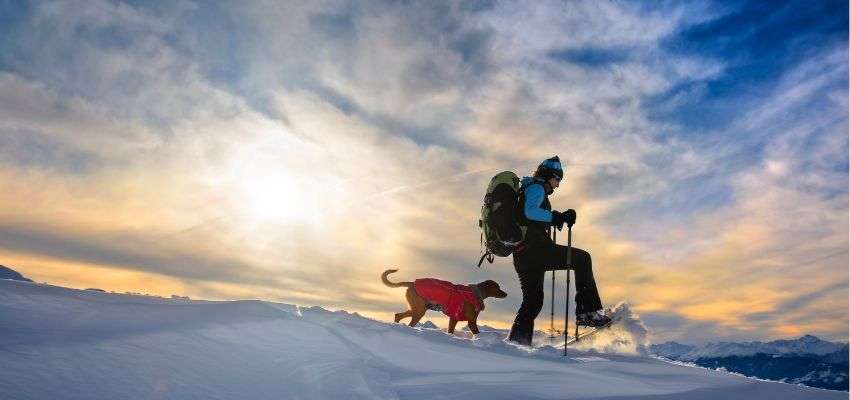
Snowshoeing with your dog can be one of the most rewarding ways to stay active and connected through the winter months. Crisp air, quiet trails, and fresh snow create the perfect setting for shared adventure — but winter conditions also require extra preparation to keep both humans and dogs safe, comfortable, and confident.
Whether you’re new to snowshoeing or simply want to refine your winter routine, these tips will help you and your dog make the most of the season.
1. Know Your Dog’s Limits (and Respect Them)
Snowshoeing is more physically demanding than regular hiking. Deep snow adds resistance, cold temperatures increase energy needs, and unfamiliar footing can fatigue dogs faster than expected.
Start with shorter outings, build gradually, and pay close attention to your dog’s body language. Signs like slowing down, lifting paws, shaking, or attempting to turn back are clear cues that it’s time to rest or head home. Shortening an outing in harsh conditions is often the smartest and safest choice
2. Dress for the Weather — For Both Ends of the Leash
Layering isn’t just for humans. Cold, wind, and moisture can affect dogs differently based on size, age, coat type, and health.
- Dogs: Many dogs benefit from winter jackets, especially puppies, seniors, smaller breeds, and short-haired dogs. Wet fur or clothing can quickly sap body heat, so check regularly to make sure your dog stays dry and warm
- Humans: Wear waterproof footwear and gloves with traction to safely manage leashes. Traction cleats such as Yaktrax or crampons improve stability on snow and ice, reducing fall risk for handlers
3. Protect Your Dog’s Paws From Snow, Ice & Salt
Winter surfaces can be tough on paws. Snow can ball up between toes, ice can cause abrasions, and road salt or ice melt can irritate skin and pads.
Helpful paw-protection strategies include:
- Dog booties for dogs who tolerate them
- Paw balm or wax to protect pads from ice and salt
- Trimming hair between toes to reduce snow buildup
- Washing and drying paws after each outing to remove salt and chemicals
After walks, check for redness, cracking, or irritation and reapply balm as needed.
4. Hydration & Fuel Still Matter in Cold Weather
Dogs may not signal thirst as clearly in winter, but dehydration is still a concern. Snow does not replace water intake.
Bring a collapsible bowl and fresh water, offer drinks during breaks, and pack small snacks to support energy needs on longer outings. Cold weather burns calories faster — for both dogs and humans.
5. Watch for Cold-Related Risks
Cold weather can pose real risks, especially when temperatures drop or wind chill increases.
- Hypothermia: Shivering is often the first sign. If your dog trembles, becomes lethargic, or seems uncomfortable, get them warm and dry immediately and contact your veterinarian if symptoms persist.
- Frostbite: Ears, paws, tail tips, and noses are most vulnerable.
General guidelines suggest extra caution when temperatures dip below 40°F for small or short-haired dogs and below 30°F for most dogs, especially during prolonged exposure
6. Use Leashes, Visibility & Trail Awareness
Winter trails can include hikers, snowshoers, snowmobilers, skiers, and wildlife. Keeping your dog leashed helps prevent injuries, conflicts, or unexpected encounters. Reflective gear or LED collars improve visibility during low-light winter days.
Always follow posted trail rules and respect shared-use spaces.
7. Desensitize Before You Hit the Trail
One of the most important (and often skipped) steps is preparing your dog for winter movement and gear.
Snowshoeing changes how you walk, sound, and handle the leash — and dogs notice.
Before your first full outing:
- Let your dog see and sniff snowshoes, poles, traction devices, jackets, and booties
- Practice walking with a wider stance and altered gait
- Gradually introduce new sounds, like crunching snow and clicking poles
- Keep early sessions short, positive, and reward-based
- Watch for stress signals and adjust as needed
Thoughtful desensitization builds confidence, reduces stress, and makes winter adventures safer and more enjoyable.
8. Choose the Right Leash Setup for Winter Conditions
Snowshoeing changes balance, footing, and stride, making leash choice especially important. A hands-free waist leash is recommended for snowshoeing, as it allows you to maintain better balance, use poles safely, and reduce strain on your arms and shoulders.
A quick safety note: hands-free leashes work best for dogs who walk politely on leash. If your dog tends to pull, pair a waist leash with a front-clip harness and practice leash manners before heading out on snowy terrain.
When choosing a waist leash, look for:
- A secure, adjustable belt that fits comfortably over winter layers
- Shock absorption to reduce the impact of sudden pulls
- A strong, weather-resistant clip
- A leash length that allows freedom without creating tripping hazards
This setup supports safer movement for both ends of the leash while keeping your hands free and your balance steady on winter trails.
Prepare Thoughtfully, Adventure Confidently
Snowshoeing with your dog is about more than braving the cold — it’s about preparation, awareness, and partnership. With the right gear, pacing, and planning, winter can become one of the most rewarding seasons to explore together.
Want More Winter Safety & Prep Guidance?
Our Winter Safety & Fun for Dogs: Seasonal Take Action Guide includes:
- Cold-weather safety tips
- Gear and traction recommendations
- Paw care and road salt awareness
- Temperature guidelines for dogs
- Enrichment ideas for indoor days
Download the guide here and set both ends of the leash up for a safe, confident winter season.
